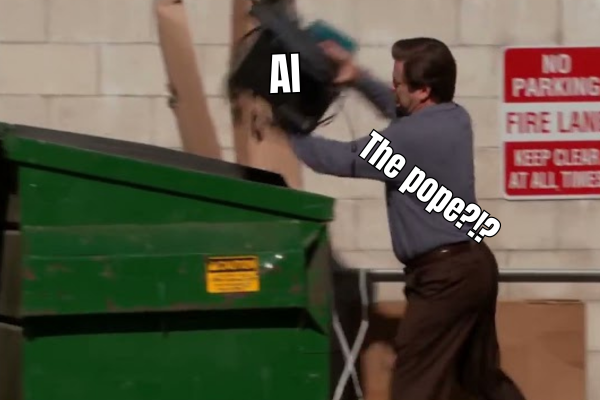
Pope Francis just threw cold water on the AI party, and it’s not what you’d expect.
A Holy Dislike for AI
The Pope’s comments were in response to an event where a human-looking robot was unveiled, and it quickly became the face of a high-profile AI chat system.
The Holy See’s official stance is that AI shouldn’t replace human connection and interaction. This might sound like a given, but the implications go way beyond a philosophical statement.
In practice, this means tech giants won’t be able to use the Pope’s endorsement to legitimize their chatbots as a substitute for human relationships.
A Reality Check on AI’s Limits
The current state of AI is more like a patchwork of narrow, specialized tools than a cohesive intelligence that can tackle complex tasks.
When it comes to understanding the nuances of human emotions and empathy, AI still falls woefully short.
Take, for instance, the infamous ChatGPT debacle, where users quickly discovered the chatbot’s inability to understand sarcasm and context.
This limitation extends beyond humor and into the realm of sensitive topics, like mental health and trauma, where humans need to be approached with care and compassion.
The AI Conundrum: Humanizing Tech
The Pope’s comments serve as a call to action for tech companies to prioritize human-centered design and AI that complements human interaction, rather than replacing it.
This means creating AI systems that can recognize and respond to emotional cues, rather than just spewing out generic platitudes or worse, misinterpreting human intent.
It’s up to tech leaders to walk the tightrope between innovation and compassion, and to recognize the value of human connection in a world where AI is increasingly omnipresent.