SpaceX’s $75 Billion IPO Was a Hail Mary for AI Ambitions in Space.
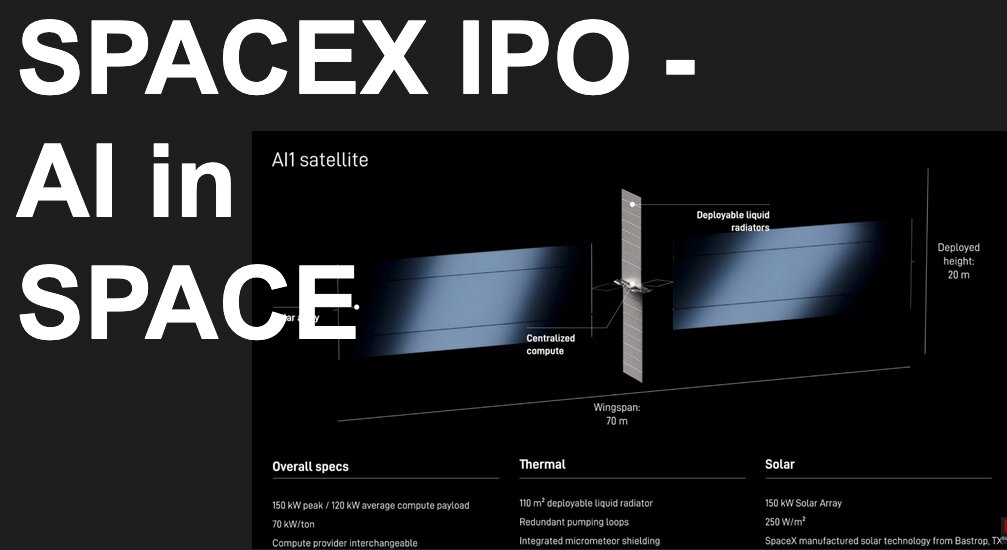
When Elon Musk’s SpaceX went public with a $75 billion IPO, it was supposed to fund the company’s ambitious plans to launch a massive network of communication satellites. **About 5,000 to 8,000 Version 3 satellites** were set to take to the skies in 2027, with another **20,000** on deck for 2028. But a significant change of plans came when SpaceX confirmed that AI data centers in space would be viable.
SpaceX had initially intended to focus on deploying a massive constellation of satellites for internet connectivity. However, the revelation that AI data centers could be built in space forced a shift in strategy.
A New AI Frontier in Space
SpaceX is now betting big on the potential of AI to revolutionize space exploration and exploitation. The company is expected to use its massive satellite network to power AI data centers that can process vast amounts of data in space. This would enable applications like real-time image processing, advanced navigation, and even AI-driven astronomy.
The implications of AI in space are profound. With AI-powered data centers, SpaceX can optimize satellite deployment, improve communication latency, and unlock new opportunities for space-based data analytics. This could, in turn, accelerate breakthroughs in fields like climate science, astrophysics, and even space tourism.
What this means
SpaceX’s pivot towards AI in space is a reminder that the line between satellite communications and AI research is increasingly blurred. As the space industry evolves, we can expect to see more companies and research institutions exploring the intersection of space technology and AI. This new era of space-AI collaboration holds immense promise for advancing our understanding of the universe and driving breakthroughs in various fields.
The $75 billion IPO was a calculated risk by SpaceX to take its vision for space-AI to the next level. Whether this strategy pays off remains to be seen, but one thing is certain – the future of space exploration and AI has never looked more exciting.