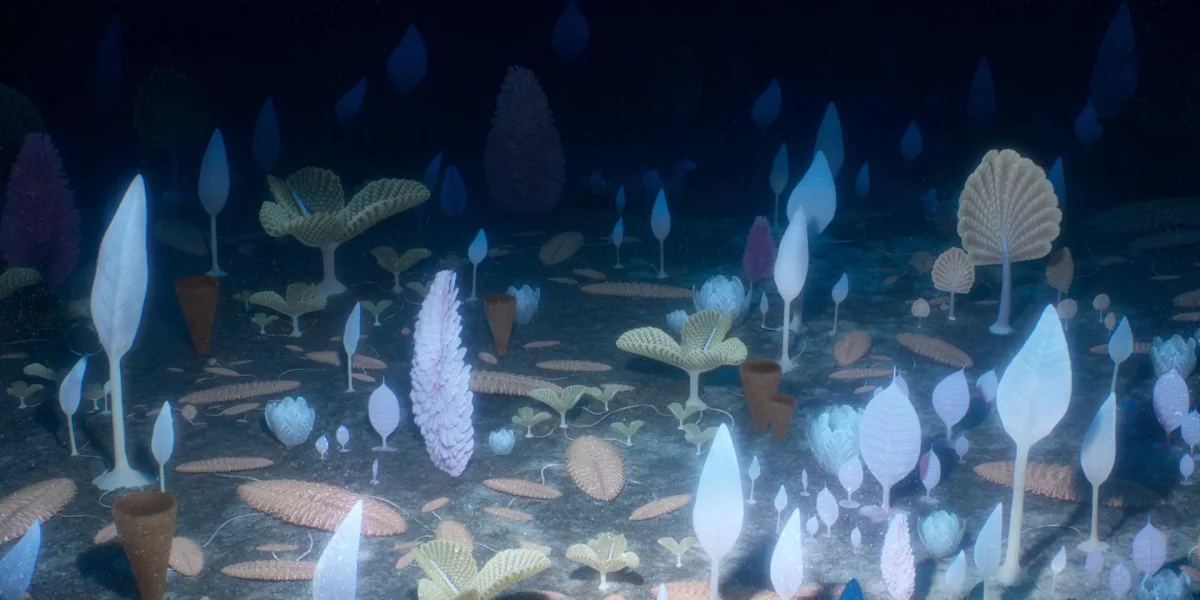
Forget the idea that life on Earth started with a big bang of evolution. For a long time, the earliest animals barely changed at all – and it was only when they started reproducing with sex that things really took off.
The Asexual Era
For millions of years, Earth’s first animals, like simple sponges and cnidarians, clung to their solitary existence, reproducing asexually. These ancient organisms, with their low-complexity body plans, didn’t have to compete for mates or defend territories, creating stable communities with little pressure to adapt or change. Essentially, they were living in a low-stress bubble that stifled evolution.
University of Cambridge researchers, led by Dr. Emma Frajka-Williams, suggest that this asexual era limited the early diversification of life on Earth. In other words, without the challenges and opportunities presented by sex, these ancient animals remained stuck in a rut, with little room for innovation or creativity.
The Sex Revolution
However, as the planet’s conditions changed and environmental pressures mounted, these early animals were forced to adapt and evolve. The invention of sex, it seems, was the key to unlocking a floodgate of biodiversity.
Sexual reproduction brought a new level of complexity to the mix, introducing genetic variation, competition for mates, and the potential for hybridization. These factors created a high-stakes environment where only the fittest (or most creative) organisms could thrive, driving the rapid evolution of new species.
According to the study, the shift from asexual to sexual reproduction marked a major turning point in Earth’s history, setting the stage for the explosion of life on our planet. This fundamental change in reproductive strategy paved the way for the incredible diversity of life we see today.
The Implications
What this means is that, when it comes to promoting biodiversity, sex is not just a quirk of nature – it’s a crucial driver of evolution. By understanding this fundamental aspect of life, scientists can gain insights into how to preserve and promote biodiversity in our increasingly threatened ecosystems.
The study’s findings also challenge our assumption that evolution is always a continuous process, with life on Earth constantly adapting to its environment. Instead, the data suggest that there may be periods of relative stability, punctuated by major changes that propel evolution forward.