Scientists Have Created Bioelectronics That Can Monitor and Treat Diseases Without Failing, Even When Stretched.
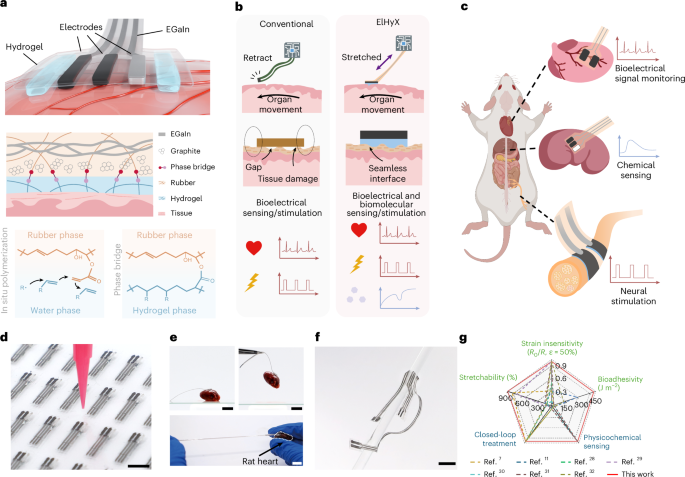
Researchers at MIT have developed a revolutionary new material that can be stretched, compressed, and twisted without losing its ability to monitor vital signs and deliver targeted treatments. This strain-insensitive bioelectronics platform combines soft, stretchy electronics with a hydrogel-based sensor, allowing it to detect changes in a person’s physiology and respond accordingly.
The innovation, described in a study published in Nature Communications, focuses on a type of bioelectronics called wet-tissue-adhesive biphasic bioelectronics. This approach involves attaching sensors and electrodes directly to the body, rather than using cumbersome external devices. By integrating these sensors with a soft, flexible material, the researchers were able to create a system that can withstand the wear and tear of everyday life, including stretching and compressing.
The bioelectronics platform was tested on diabetic rats, who were fitted with devices that monitored their blood glucose levels and provided targeted treatment to manage the condition. The devices successfully detected changes in the rats’ physiology and adjusted treatment accordingly, demonstrating the potential for this technology to be used in closed-loop disease management systems for humans.
What This Means for Patients
Imagine being able to monitor your vital signs and receive targeted treatment without the need for bulky external devices. This is the promise of the new strain-insensitive bioelectronics platform developed by MIT researchers. The technology has the potential to revolutionize the treatment of diseases such as diabetes, by providing a seamless and continuous monitoring experience that adapts to an individual’s changing needs.
The Future of Bioelectronics
The development of this technology represents a significant step forward in the field of bioelectronics, which has long been hindered by the limitations of traditional materials. By combining soft, stretchy electronics with a hydrogel-based sensor, the researchers have created a platform that is not only more comfortable and convenient, but also more effective and reliable. As this technology continues to evolve, it is likely to have a profound impact on the treatment of a wide range of diseases and conditions.