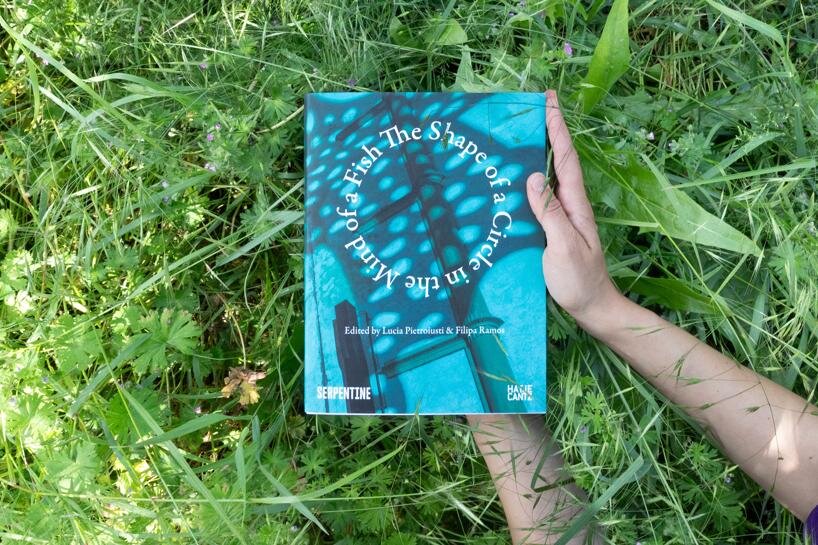
Art Meets Science in ‘The Shape of a Circle in the Mind of a Fish’
Between 2019 and 2025, the Serpentine Galleries in London brought together an extraordinary team of scientists, artists, and researchers to explore the mysteries of consciousness and knowledge-making across various forms and beings.
At the heart of this interdisciplinary project were curators and researchers Lucia Pietroiusti and Filipa Ramos, who spent years probing the porous boundaries between human and non-human intelligence. One unlikely subject they chose to illuminate was the humble puffer fish.
Their investigation into puffer fish intelligence led to the development of ‘The Shape of a Circle in the Mind of a Fish’, a unique project that combines art, science, and philosophy to challenge our understanding of consciousness and knowledge-making. Through a series of workshops, lectures, and exhibitions, Pietroiusti and Ramos facilitated a dialogue between experts from diverse fields, from neuroscience and ethology to philosophy and anthropology.
One of the key outcomes of this project was the recognition that puffer fish, often dismissed as simple creatures, possess a sophisticated cognitive ability to navigate complex environments. By studying their behavior and social interactions, researchers gained insights into the evolution of intelligence and the development of problem-solving skills.
Unpacking the Boundaries of Consciousness
Pietroiusti and Ramos’s work with puffer fish intelligence has far-reaching implications for our understanding of consciousness and knowledge-making. By exploring the boundaries between human and non-human intelligence, they encourage us to reevaluate our assumptions about the natural world and our place within it.
As we continue to grapple with the complexities of artificial intelligence and its potential impact on society, the work of Pietroiusti and Ramos serves as a timely reminder of the importance of interdisciplinary collaboration and the value of exploring the unknown.
What This Means
The intersection of art and science has never been more relevant, and Pietroiusti and Ramos’s work with puffer fish intelligence is a prime example. By challenging our understanding of consciousness and knowledge-making, they inspire us to think more critically about the world around us and our place within it. As we move forward in an increasingly complex and interconnected world, it’s essential to foster a deeper appreciation for the intelligence and complexity of all living beings – human and non-human alike.