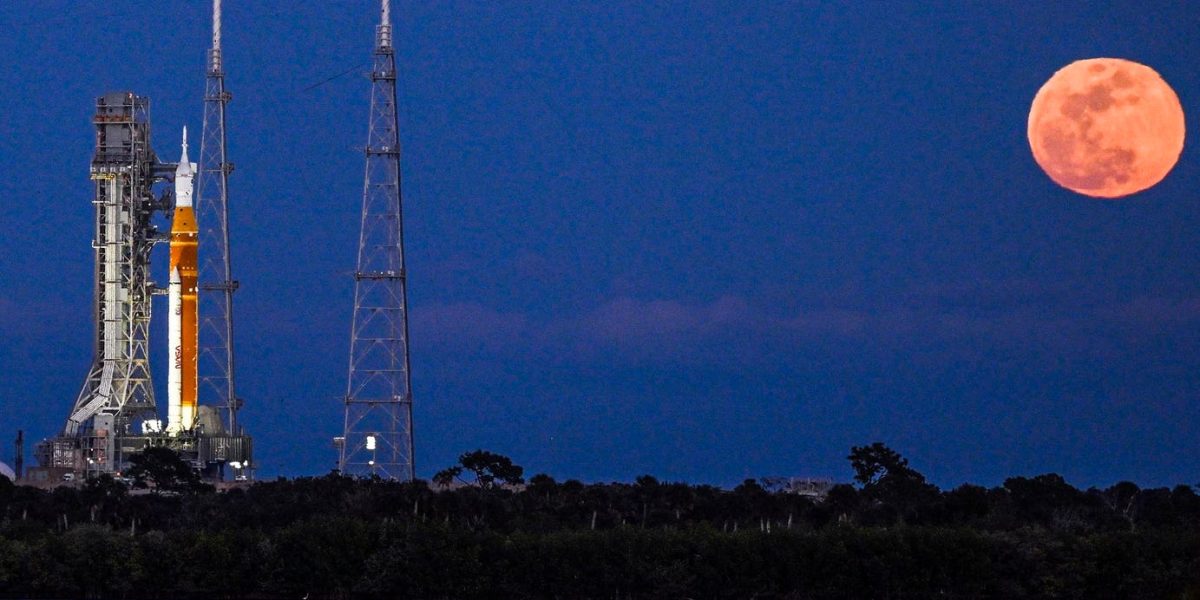
Space Launch System’s Artemis II mission marks a pivotal moment for global space efforts.
A full moon rises over the Kennedy Space Center as the Space Launch System (SLS) rocket and the Orion spacecraft, integrated for the Artemis II mission, stand ready on Launch Pad 39B. This pivotal moment in space exploration is not just a symbolic nod to humanity’s enduring fascination with the cosmos; it’s a tangible indicator of the rapidly increasing importance of space in global security and prosperity.
As the world grapples with the complexities of a multipolar international system, space is emerging as a crucial domain where nations can collaborate, compete, and even cooperate on mutually beneficial projects. A former senior space executive highlights six key trends shaping the future of space: the Artemis program, China’s escalating space ambitions, the rise of private space companies, the growth of satellite constellations, the militarization of space, and the increasing importance of space situational awareness.
The Artemis program, a collaborative effort between NASA and commercial partners, aims to return humans to the lunar surface by 2025. Successful execution of this program will not only pave the way for further lunar and Mars exploration but also establish a sustainable human presence in space, enabling a new era of scientific research, innovation, and even space tourism.
China’s space program, meanwhile, has been rapidly gaining momentum. With China’s space station, Tiantang, orbiting the Earth, Beijing is expanding its space capabilities to include lunar and Mars exploration, space-based solar power, and a human presence on the Moon. This growth in Chinese space capabilities is, in part, a response to the United States’ Artemis program and underscores the importance of space as a key domain in the global balance of power.
The Space Economy Takes Shape
The growth of private space companies, such as SpaceX, Blue Origin, and Virgin Galactic, has transformed the space landscape. These companies are not only reducing the costs associated with space access but also driving innovation and competition in the industry.
What this means: Increased investment in space technology will create new opportunities for economic growth, job creation, and innovation, while also driving the development of critical infrastructure, such as satellite constellations, to support emerging industries like remote sensing and telecommunications.