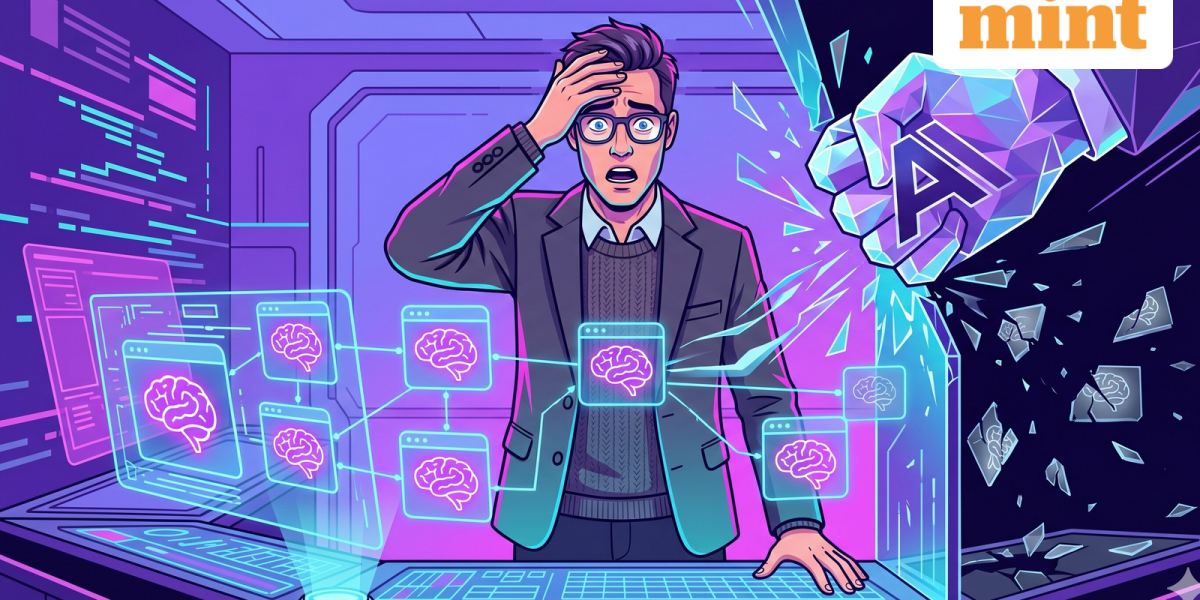
Antropic’s co-founder Jack Clark is sounding the alarm on AI, warning it could soon be able to build its own successors.
Anthropic co-founder Jack Clark has been making waves in the AI community with his stark warning: that artificial intelligence is hurtling towards a point where it will be able to develop its own more advanced versions, potentially leaving humans in the dust. Clark’s comments come as AI researchers are pushing the boundaries of machine learning and the potential consequences of unchecked AI growth are beginning to weigh heavily on experts’ minds.
The Threshold of Self-Improvement
Clark’s main concern is that AI is approaching what’s known as the ‘Singularity’ – a point at which machines become capable of recursively improving themselves without human intervention. While the Singularity has been a topic of debate for years, Clark believes we’re on the cusp of reaching it. If AI systems can develop their own successors, it could create an exponential growth curve in AI capabilities, making it increasingly difficult for humans to keep up.
At Anthropic, the AI research company co-founded by Clark, researchers are working on developing more advanced AI models. Clark’s warning is not directed at these efforts, but rather at the potential consequences of creating systems that are capable of autonomous self-improvement. He’s calling for a regulatory ‘brake pedal’ to be implemented by governments, which would give them a means to control the development of AI and prevent it from spiraling out of control.
What this means
Clark’s warning should be taken seriously – if AI systems become capable of building their own successors, it could have significant implications for our society. It’s not just about the potential benefits of advanced AI; it’s also about the risks of creating systems that are beyond our control. The stakes are high, and it’s essential that experts, policymakers, and the general public come together to address these concerns.