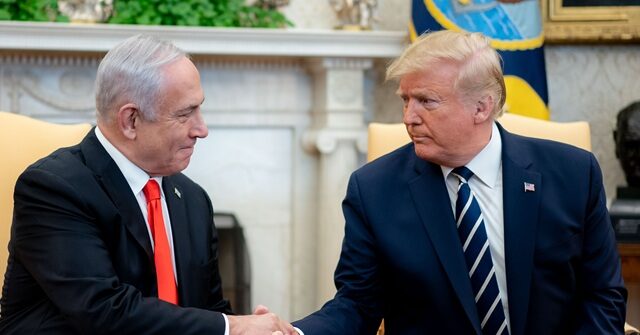
U.S. Congressmen Marlin Stutzman (R-IN) and Abe Hamadeh (R-AZ) have sparked controversy with the introduction of a resolution aimed at phasing out the $3.8 billion in annual U.S. military aid to Israel and shifting focus towards a trade-oriented partnership.
The Proposal: “Trade over Aid”?
The resolution proposes a multi-step process to eliminate U.S. military aid to Israel, a long-standing recipient of American taxpayer dollars. Proponents of the move, including Stutzman and Hamadeh, argue that a strengthened trade partnership will benefit both nations, fostering economic cooperation and mutual growth.
However, critics argue that this resolution disregards the strategic security implications of abruptly halting military aid to a key Middle Eastern ally. Israel has historically relied on this U.S. support to maintain its regional defense capabilities.
Tech Implications: Israel’s AI Ambitions
Israel has made significant strides in AI development, with major breakthroughs in areas like cybersecurity, autonomous systems, and computer vision. Some argue that a new trade-centric partnership could lead to increased U.S.-Israel collaboration in AI research and innovation, potentially yielding mutually beneficial advancements.
However, this shift could also impact the Israeli government’s ability to maintain its existing AI research and development initiatives, which have been heavily subsidized by the U.S. military aid. The resolution’s implications on Israel’s AI ambitions and potential economic impact are still unclear.
What This Means
If the resolution passes, it will likely signal a significant shift in U.S.-Israel relations. The potential outcome will be a reevaluation of the terms of trade and economic cooperation between the two nations. This development will be closely watched by experts in international relations, cybersecurity, and AI research, as it has the potential to reshape the strategic landscape in the Middle East and beyond.