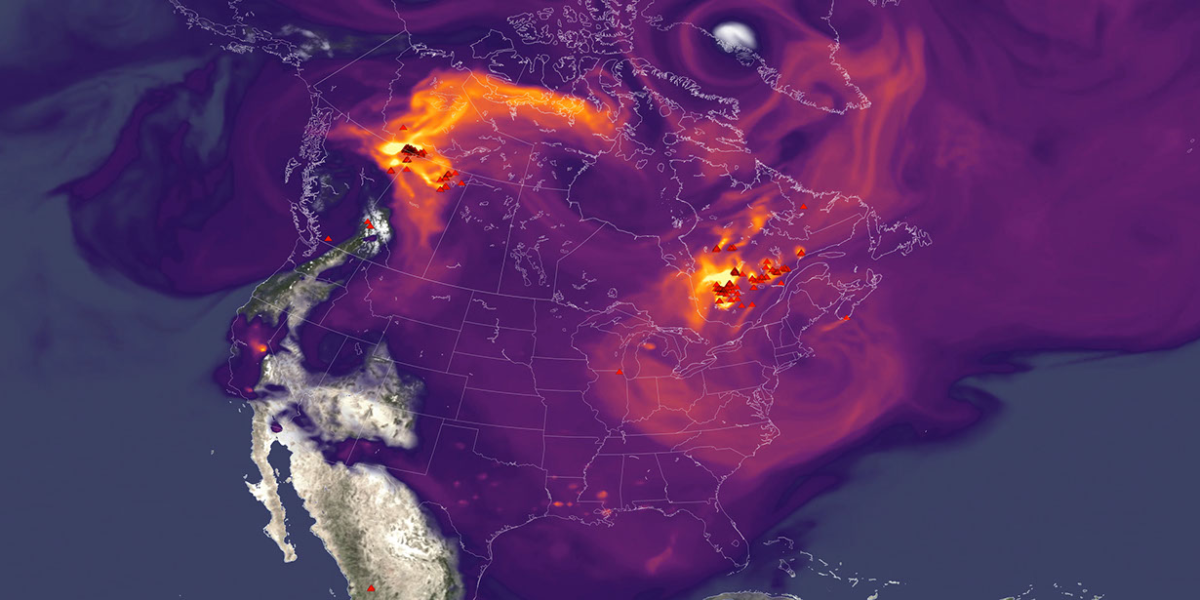
A NASA-funded study has revealed a shocking link between wildfire smoke and ground-level ozone pollution, exposing a lesser-known threat to air quality in the contiguous United States.
The Ozone Toll: A Hidden Health Risk
Over the last decade, wildfires have ravaged the American landscape, spewing out massive amounts of smoke that blanket the region. While the immediate effects of these fires are well-documented – burning homes, destroying forests – a new study suggests that there’s a more insidious consequence: the exacerbation of ground-level ozone pollution.
Ground-level ozone, often referred to as smog, is a noxious gas that can cause respiratory problems, even at low concentrations. The NASA-supported study, published in a peer-reviewed journal, found that wildfires have exacerbated ozone pollution across much of the contiguous United States, creating unhealthy air far from active flames.
The research analyzed ozone measurements from over 1,000 monitoring stations across the country, comparing data from before and after major wildfires. The findings are stark: wildfires have increased ozone pollution by up to 20% in some areas, with the most significant impacts felt during the summer months when ozone levels are already at their highest.
The Health Implications
The hidden toll of wildfire smoke on ozone pollution has serious implications for public health. Children, the elderly, and people with pre-existing respiratory conditions are particularly vulnerable to the effects of ozone pollution, which can trigger asthma attacks, exacerbate chronic obstructive pulmonary disease (COPD), and even lead to premature death.
What this means is that the growing threat of wildfires is not just about the immediate destruction caused by the fires themselves, but also about the long-term consequences for air quality and public health. As wildfires become more frequent and intense due to climate change, it’s essential that policymakers and public health officials take this hidden risk into account when developing strategies to mitigate their impact.
A New Era of Air Quality Concerns
The study’s findings highlight the need for a more comprehensive approach to air quality management, one that takes into account the complex interplay between wildfires, ozone pollution, and public health. By acknowledging this hidden toll, we can work towards creating healthier communities and a more sustainable future.