China’s AI Ambitions No Longer Depend on Nvidia As Local Companies Catch Up.
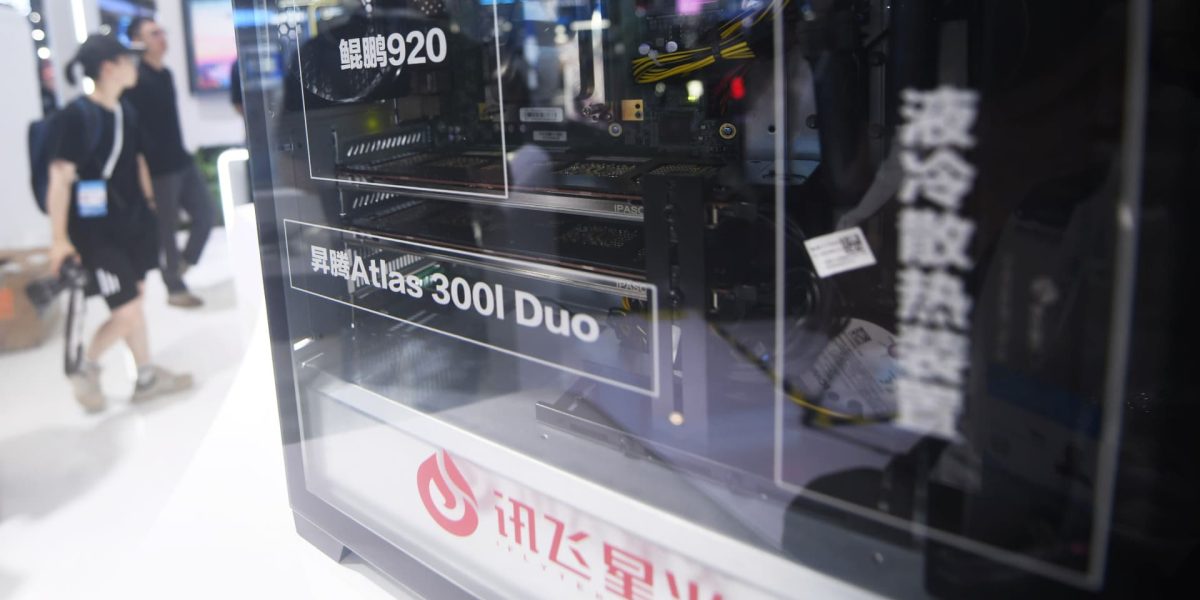
China’s tech giants are rapidly developing their own AI chips, making them less reliant on Nvidia, the US-based leader in AI hardware. iFlytek, a Chinese speech recognition and AI startup, has just showcased a liquid-cooled server, powered by Huawei’s Kunpeng 920 central processing units (CPUs) and Ascend AI chips.
The server is a significant milestone for China’s AI ambitions, marking a shift away from dependence on Nvidia’s A100 and T4 GPUs. These US-built graphics processing units (GPUs) were the de facto choice for AI development in China until now. But, with local players like Huawei, Alibaba, and Baidu pushing the boundaries of AI chip development, the landscape is changing.
Huawei’s Kunpeng 920 CPUs are already being used in data centers across China, and the Ascend AI chip, a dedicated AI processor, is a promising alternative to Nvidia’s A100 GPUs. iFlytek’s server, featuring both, is a testament to the rapid progress China is making in developing its own AI ecosystem.
### What this means
China’s push for self-sufficiency in AI hardware has significant implications for the global tech industry. As Chinese companies invest heavily in AI research and development, they’re creating new opportunities for collaboration and potentially disrupting the existing supply chain.
### China’s AI Chip Market Takes Shape
The market for AI chips is increasingly fragmented, with Chinese players like Huawei, Alibaba, and Baidu vying for a share of the growing market. While Nvidia remains a dominant player globally, China’s AI chip market is growing rapidly, driven by government support and the need for local companies to develop more autonomous systems.
### Implications for Nvidia
Nvidia’s dominance in the AI chip market is facing a new challenge, as Chinese companies like iFlytek and Huawei increasingly adopt their own hardware solutions. While Nvidia has a strong presence in the US and Europe, its reliance on the Chinese market, where it has partnerships with top companies, makes its position vulnerable to shifting allegiances.
### Watching the AI Chip Landscape
The competition in the AI chip market is set to intensify in the coming years. As China continues to invest in its AI infrastructure, global players like Nvidia will need to adapt to the changing landscape. The next few years will be pivotal in determining the future of AI hardware and the role of Chinese players in the industry.